
THE LAUBERHORN
Mid January · Wengen, Bernese Oberland · Three Days · Since 1930
2027: 15 to 17 January
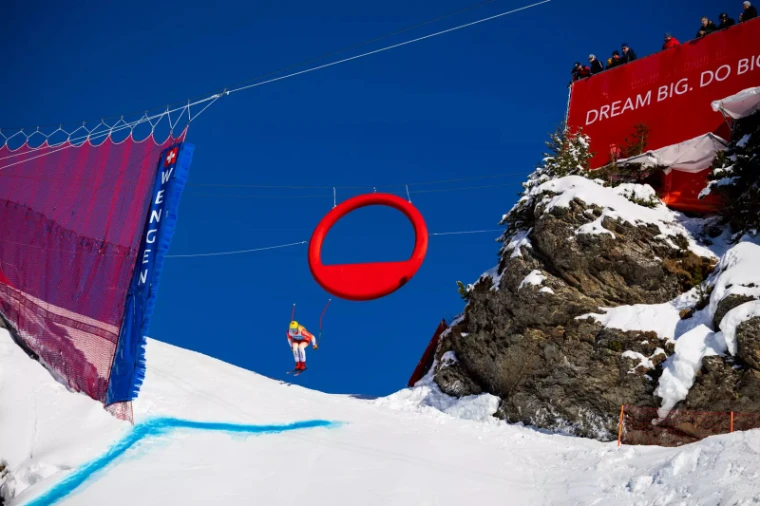
The Lauberhorn is three days of World Cup skiing above Wengen in the middle of January, and the oldest race on the World Cup circuit. Its downhill is the longest on the circuit and the fastest.
It falls the week before Kitzbühel. Between them, the two make the fortnight that settles most reputations in the sport.
The Course
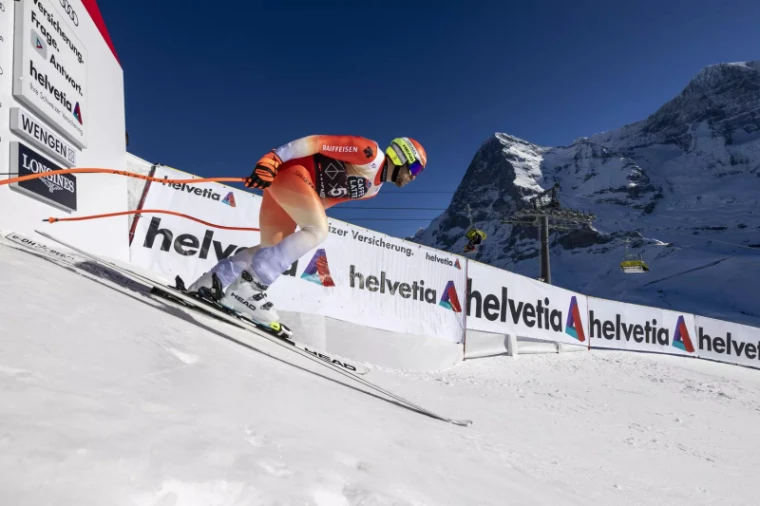
Four and a half kilometres from a start at two thousand three hundred metres, taking two and a half minutes. That is thirty to forty-five seconds longer than a standard downhill, and nothing else on the circuit asks a skier to hold a tuck for so long.
The Haneggschuss is the fastest stretch in World Cup racing anywhere. A Frenchman was measured on it at a hundred and sixty-two kilometres an hour in 2013, and nobody has gone quicker since, on any course.
The Hundschopf is the jump everyone knows: a blind take-off through a gap between two rocks, forty metres of air, and a turn waiting at the landing. The pitch there reaches forty-one degrees, the steepest section on the circuit.
The course also crosses a bridge at eighty kilometres an hour and passes through a tunnel beneath the viaduct of a mountain railway. It was laid on the terrain rather than cut into it, which is why it does these things.
Kristian Ghedina’s record from 1997 stood until Marco Odermatt beat it in 2025.
The Village
Wengen has no cars. It sits on a shelf above the Lauterbrunnen valley and is reached only by rack railway.
Which means everyone arrives the same way, on the same trains, and walks from the station. The racers go up by railway to Kleine Scheidegg and take a chairlift to the start hut, on the same line the spectators use.
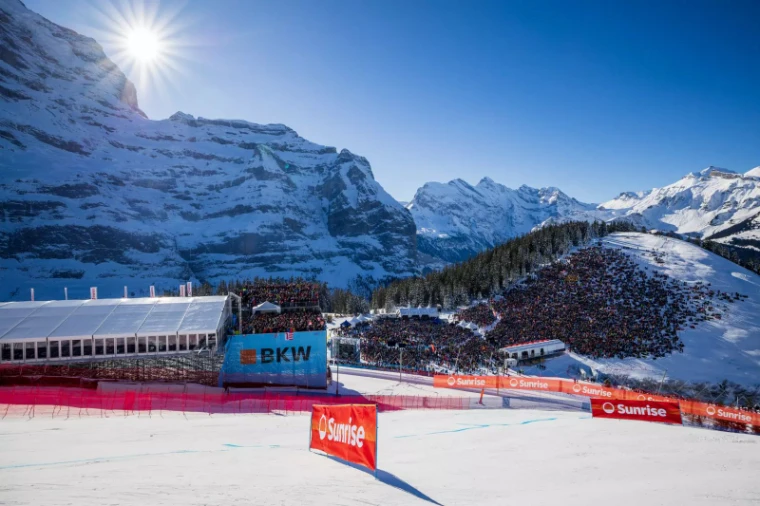
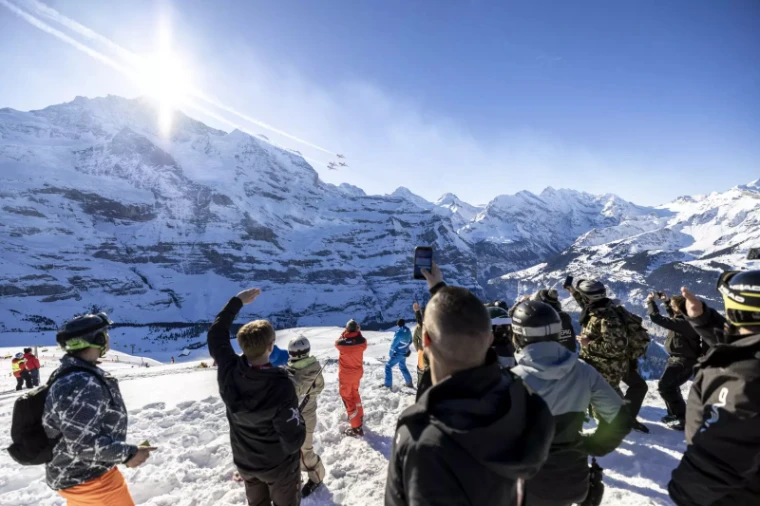
All of it happens beneath the north face of the Eiger, with the Mönch and the Jungfrau alongside. Photographs do not manage it.
The races were run through the Second World War, because Switzerland was neutral and the trains kept running.
What to Know
Ernst Gertsch, a local skier, put on the first races in February 1930 with a budget of five hundred francs. They have been run in most years since. Heavy snow stopped them in 1983, a fatal crash in training in 1991, and the pandemic in 2021.
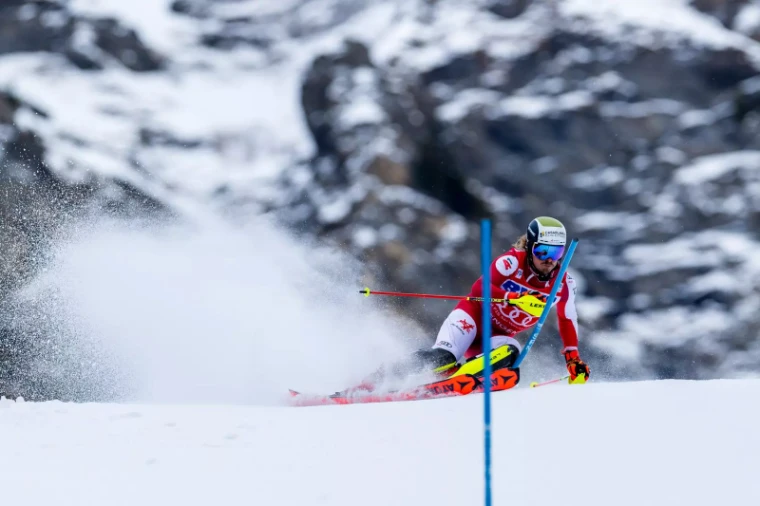
Saturday is the downhill. Sunday is the slalom, on a different course above the village.
Tens of thousands come, and a good many stay down in the valley and ride up for the day. Beds in the village go a long way ahead.
The best viewing is not at the finish. Walk up to the Hundschopf and watch them come out from between the rocks.
The mistake is choosing between Wengen and Kitzbühel. They are consecutive weekends on the same circuit and the two courses ask opposite questions of a skier. Do both.
The Court
The Lauberhorn is not the Court’s own. Places at the finish, rooms in the village and passage on the railway are sought on a member’s behalf, and the Court arranges the whole of it: getting there, where to stay, and the table afterward. Wengen and Kitzbühel fall a week apart, and the Court can put the two together.
How one becomes a member is set out under Admission.
Set down September MMXXVI · Revised October MMXXVI