BRITISH CHAMPIONS DAY
Mid October · Ascot Racecourse, Ascot · One Day · Since 2011
2027: 16 October
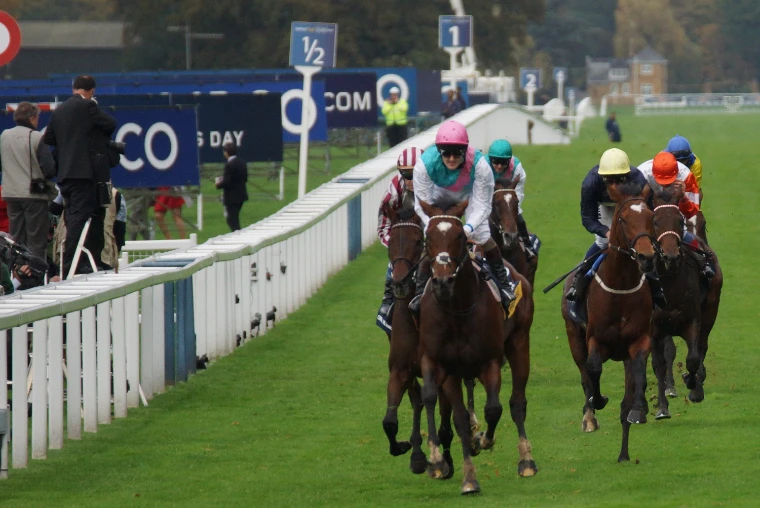
British Champions Day is a Saturday of flat racing at Ascot in the middle of October, the finale of the British Flat season: seven races, five of them Group 1, for £4.35 million, the richest day of racing in Britain. The Champion Stakes, over a mile and a quarter, is the feature, and the Queen Elizabeth II Stakes is run on the straight mile; the champion jockey is crowned before the crowd goes home.
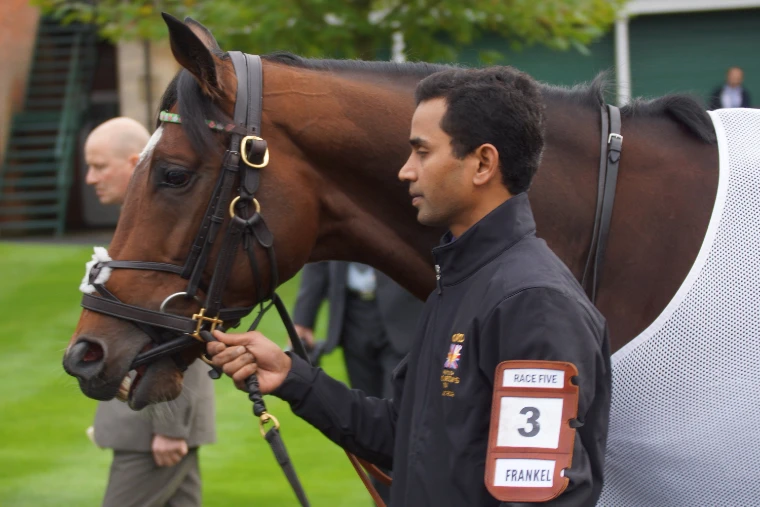
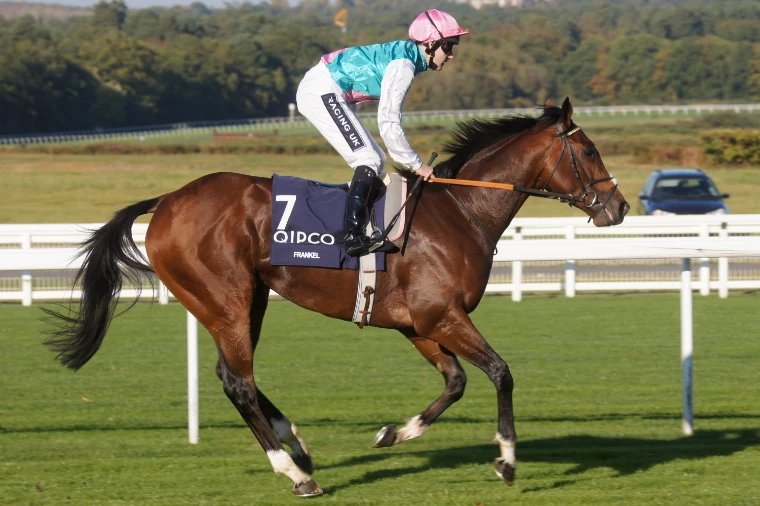
At the first meeting, in 2011, Frankel won the Queen Elizabeth II Stakes. He came back the next year to end his unbeaten career in the Champion Stakes, before thirty-two thousand people, a modern record for autumn flat racing in Britain.
Newmarket to Ascot
The day was made in 2011 by gathering the old end-of-season races of two courses. Ascot gave the Queen Elizabeth II Stakes and the Diadem Stakes; Newmarket gave the Champion Stakes, the Jockey Club Cup and the Pride Stakes. The Diadem became the British Champions Sprint, the Jockey Club Cup the Long Distance Cup, and the Pride the Fillies’ and Mares’ Stakes. The Queen Elizabeth II and the Champion kept their names.
The Champion Stakes was first run at Newmarket in 1877, and won by Springfield. Moved to Ascot, at £1.3 million, it was the richest race in Britain in 2011, until the Derby took that back the next year.
For its first fourteen years the day was the end of the British Champions Series, the finals of five divisions of the summer’s racing. The Series was given up in 2025, and the day has since had seven races: the Long Distance Cup was raised to Group 1, making five, and a two-year-old race worth £250,000 was added at six furlongs.
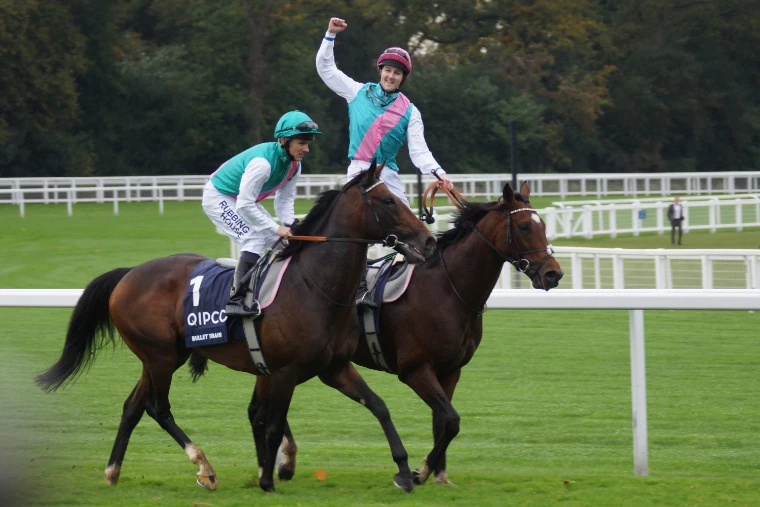
Hollie Doyle became the first woman to ride a winner on the day, on Trueshan, and thirty-five minutes later won her first Group 1, on Glen Shiel, in the Champions Sprint.
The Card
As published for 2026, the card begins with the two-year-olds over six furlongs, then the Long Distance Cup over two miles, the Champions Sprint over six furlongs, and the Fillies’ and Mares’ Stakes over a mile and a half. The Queen Elizabeth II Stakes follows on the straight mile, and then the Champion Stakes, worth £1.3 million, for a field of at most fourteen. The Balmoral Handicap, over a mile, closes the card.
Between the races the champions are presented: the champion apprentice, the champion owner and the champion jockey, whose title closes that afternoon, with a trophy and a guard of honour. Horses who have won on the day in past years parade before the racing, and the British Racing Hall of Fame inducts its new members in the parade ring. After the last race there is a concert in the Queen Anne Enclosure.
There are three enclosures. The Queen Anne has covered terraces and lawns; the Winning Post has its own lawns and terracing beside the post, near the parade ring; and the King Edward VII, Ascot’s premium enclosure, has seats on the fourth floor of the grandstand. The Parade Ring Restaurant, beside the Royal Box, and ON 5, on the fifth floor, are for those who book a table, and give them the use of the King Edward VII.
In 2026 the day falls on Saturday 17 October, as Qatar Racing British Champions Day, with a pony racing championship run on the card for the first time and SIGMA, with Ellie Sax, playing afterwards. Calandagan, who won the Champion Stakes in 2025 for Francis-Henri Graffard and the Aga Khan Studs, may come back to defend it; the Gold Cup and Goodwood Cup winner Scandinavia, trained by Aidan O’Brien, was favourite for the Long Distance Cup in September, and Kalpana headed the betting for the Fillies’ and Mares’.
What to Know
It is held on a Saturday in the middle of October: in 2027, on 16 October.
Tickets are sold for each enclosure. In 2026 the Queen Anne cost from £32, the Winning Post from £52 and the King Edward VII from £94. Racegoers aged eighteen to twenty-six buy at a discount through Club 26.
In the King Edward VII Enclosure gentlemen must wear a jacket, collared shirt and tie, and trainers are not allowed; ladies dress for a smart occasion, and hats are encouraged. The other enclosures have no formal code. Fancy dress and sportswear are refused everywhere. A lounge suit, one level above what is asked.
South Western Railway runs from London Waterloo in about fifty-two minutes, and from Reading in twenty-seven; Ascot station is seven minutes’ walk from the course. Helicopters land near the course. Stay in Windsor: the Fairmont Windsor Park, or the Sir Christopher Wren in the town.
The mistake is to judge the going weeks ahead. “It is Ascot in the middle of October”, and the ground can turn soft.
The Court
British Champions Day is not the Court’s own. Places in the King Edward VII Enclosure, or a table in the Parade Ring Restaurant, are sought on a member’s behalf, and the Court arranges the whole of it: getting there, where to stay in Windsor or London, and the table afterward. The Court is at Longchamp on the first Sunday of the month for the Arc.
How one becomes a member is set out under Admission.
Set down October MMXXVI